Inside Amazon's Tech Stack, Cloud Scale, and AI Model Capabilities
A deep technical and operational analysis of Amazon's cloud architecture, AI model deployments, financial performance, and global infrastructure.
In5Seconds Editorial Desk··7 min read
The 5-second version
Founded in 1994 by Jeff Bezos as an online bookstore. AWS provides cloud infrastructure across 20+ global regions. Partnerships include enterprise AI integrations with Anthropic.
Keep reading for the full breakdown ↓
Amazon.com, Inc. was founded on July 5, 1994, by Jeff Bezos and initially launched as an online bookstore before expanding into cloud computing, artificial intelligence, digital streaming, and global logistics. The company initially incorporated under the name Cadabra, Inc. before launching its consumer-facing website on July 16, 1995. Over three decades, the company evolved into a technology conglomerate operating across digital media, healthcare, autonomous mobility, and enterprise cloud hosting.
Origins, Corporate History, and Expansion Milestones
Following its 1995 online bookstore launch, Amazon expanded its product catalog and operational network through rapid sequence milestones in 1996, 1997, and 1998. In October 2000, the company introduced its third-party Marketplace, allowing independent sellers to offer products directly on the Amazon platform. This shift altered the company's operational trajectory, establishing a dual retail model combining direct direct-to-consumer inventory with marketplace fulfillment services.
Reporting regarding Amazon's corporate headquarters reveals conflicting documentation across primary and secondary sources. According to Wikipedia, Amazon maintains corporate headquarters in Seattle, Washington, and Arlington County, Virginia. Technical business directories including EBSCOhost, Britannica, and TechTarget cite Seattle, Washington as the primary headquarters location, whereas Stand8 identifies Denver, Colorado as the headquarters. Founding records also show slight variation, with Wikipedia and TechTarget citing Bellevue, Washington as the founding city, while EBSCOhost attributes the company's inception directly to Seattle.
Throughout its operational expansion, executive leadership evolved under founder Jeff Bezos and subsequent Chief Executive Officer Andy Jassy. The company's stated corporate mission is to make customers' lives better and easier every day by relentlessly inventing on their behalf. To maintain this objective across disparate markets, Amazon established specialized business divisions, including Amazon Lab126 for hardware design, Amazon Games, Amazon Publishing, and Amazon MGM Studios for media production.
Cloud Computing Infrastructure and Machine Learning Stack
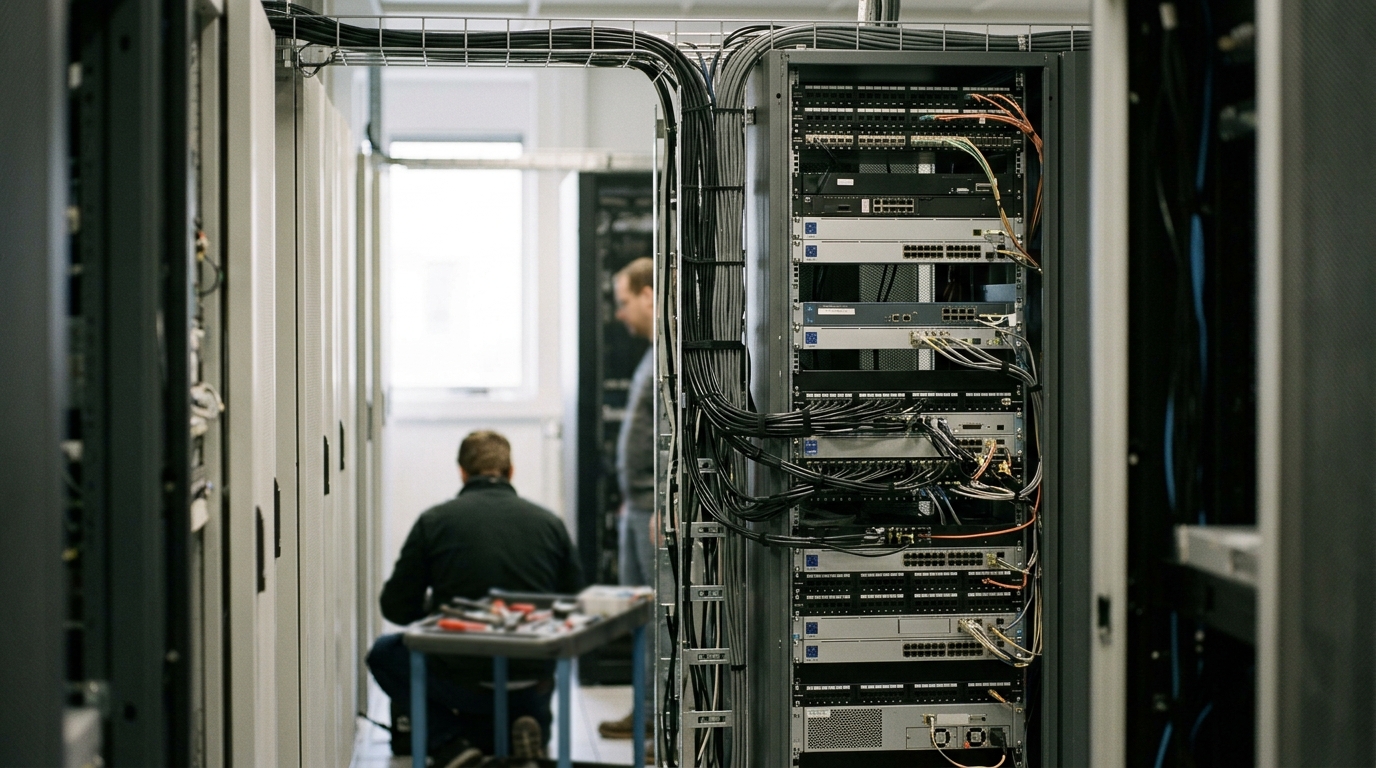
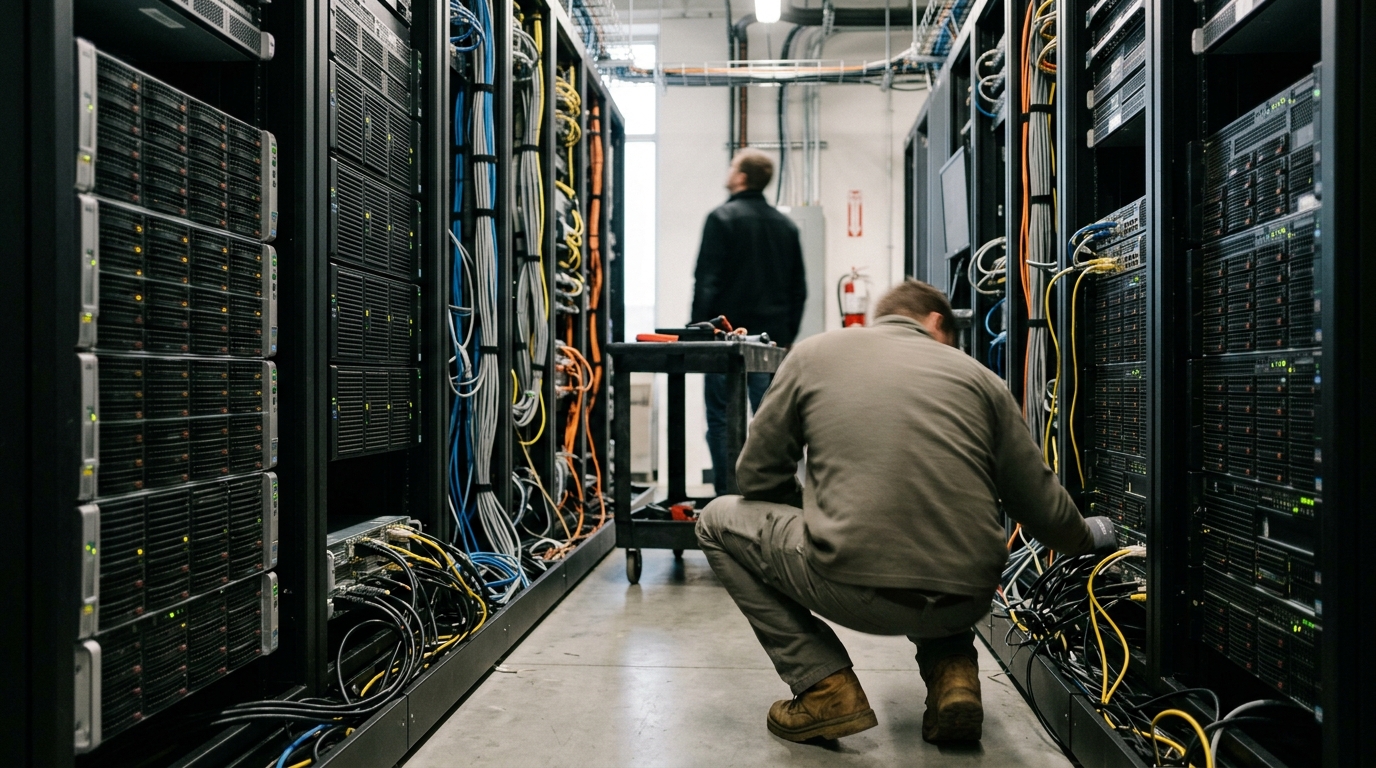
Launched commercially in 2006, Amazon Web Services (AWS) represents the enterprise infrastructure foundation of the organization. AWS delivers compute capacity, serverless execution environments, database management, and machine learning deployment tools across 20+ geographic regions and more than 200 features. The cloud platform functions as both an external service provider for global enterprise clients and the host environment for Amazon's internal software operations.
Amazon's artificial intelligence infrastructure relies on both proprietary model development and strategic enterprise partnerships. The organization established a substantial investment and compute relationship with AI developer Anthropic, hosting foundation models directly on AWS infrastructure. For merchant and retail operations, Amazon deploys automated machine learning models including Seller Assistant within Seller Central and algorithmic inventory balancing through Amazon Supply Chain Services.
Amazon Financial and Segment Scale Benchmarks
Key global revenue, net sales, and operating figures reported in billions USD. · Source: Official Financial Reports
Consumer-facing AI architectures are integrated directly into ambient hardware devices. Amazon Alexa serves as the central voice interaction engine across Echo smart speakers, Fire Tablet screens, Fire TV displays, and the proprietary Fire OS ecosystem. These hardware deployments are complemented by smart home networks built around Eero LLC mesh routers, Ring security cameras, and Blink smart monitor systems.
Technical Limitations, Operational Constraints, and Unverified Claims
Despite its global logistics and cloud hosting scale, Amazon encounters distinct structural and technical limitations across its business units. Third-party seller operations are subject to standardized commission structures ranging from 15-25% per transaction, creating friction with independent merchants. Discount retail channels such as Amazon Haul, Amazon Resale, and Amazon Quick operate under rigid inventory clearance limits and thin margins when competing against external platforms like eBay, Shopify, TikTok, and Walmart.
Analysis of public claims reveals several unconfirmed assertions regarding Amazon's workforce and infrastructure operations. A report claiming that escalation in the Iran conflict disrupted Amazon's cloud data centers in the Middle East remains unverified. Additionally, public assertions claiming that 1 out of every 153 American workers is an active Amazon employee lack confirmation across official workforce documentation.
Operational dependencies also exist across physical supply networks. Specialized retail and delivery units, including Amazon Fresh, Amazon Books, and Whole Foods Market, face local supply chain bottlenecks that differ significantly from digital cloud hosting workflows. Technical development in automated transport, managed under autonomous vehicle subsidiary Zoox and satellite broadband enterprise Kuiper Systems, requires ongoing capital outlays before reaching widespread deployment.
Financial Performance, Operations Scale, and Global Metrics
Official financial documentation outlines the massive scale of Amazon's operational revenues and global footprint. Enterprise reports record primary revenue figures of US$818.0 billion, US$716.9 billion, and US$411.1 billion across consolidated operating periods. Operating income benchmarks demonstrate strong profitability across core segments, recording separate earnings totals of US$79.98 billion and US$77.67 billion.
The company maintains a physical fulfillment footprint supported by 1,576,000 employees worldwide, with separate operational measurements citing a workforce scale of 1.5 million distribution personnel. Capital outlays for supply chain upgrades include individual logistics investments of $1.5 billion, complemented by strategic corporate acquisitions such as the $536M buyout of online footwear retailer Zappos. Revenue growth trends across primary business divisions reflect baseline percentage shifts of 8.8%, 25%, and 30% across modern operating quarters.
Amazon's physical infrastructure includes distribution centers, air hubs, and delivery stations spanning North America, South America, and international territories. Logistics operations are managed internally via Amazon Logistics and Amazon Air, utilizing automated sorting hardware created by Amazon Robotics. These physical networks support multi-day and single-day delivery targets for a subscription customer base exceeding 100 million Amazon Prime members globally.
Fee Structures, Wage Scales, and Business Monetization
Monetization across Amazon's ecosystem relies on tiered fee structures for merchants, premium subscription plans for consumers, and usage-based pricing for cloud computing. Standard merchant processing inside Seller Central applies seller fees between 15-25%, depending on item classification and processing requirements. Sellers utilizing Multichannel Fulfillment or Amazon Supply Chain Services pay additional handling and storage charges based on volume and delivery speed.
Labor expenses within Amazon's logistics network operate under standardized hourly pay minimums. Entry-level fulfillment and warehouse roles feature baseline starting pay ranging from $20/hour to $24/hour across US fulfillment facilities. These wage floors apply across physical processing hubs, delivery stations, and regional sorting centers.
Consumer monetization centers around recurring digital subscriptions and direct sales. Amazon Prime provides unified access to free delivery services, Amazon Music streaming, and video content on Amazon Prime Video and MGM+. Complementary paid digital services include Prime Video add-ons, MGM+, Amazon Luna cloud gaming subscriptions, Goodreads content tools, and digital audio purchases through Audible and Brilliance Audio.
Core Business Segments: Retail, Healthcare, and Media Services
Amazon's commercial footprint is divided across distinct operational sectors, spanning digital commerce, physical stores, healthcare systems, and digital entertainment. The core e-commerce operation is supported by peripheral tools including Amazon Pay for digital transaction processing and specialized inventory portals like AbeBooks, Shopbop, and Woot.
Physical retail experiments have redefined traditional store concepts, highlighted by Quartz's examination of cashierless supermarket technologies under the concept of store environments operating without cashiers. Physical store footprints include Whole Foods Market, Amazon Fresh grocery locations, and legacy Amazon Books outlets. Consumer payment and identity solutions at physical locations are streamlined through contactless biometric systems.
Healthcare services represent an expanding vertical for the enterprise. Following the acquisition of PillPack, the company launched Amazon Pharmacy to manage direct-to-consumer prescription fulfillment. The organization further broadened its medical care infrastructure by acquiring One Medical, enabling direct primary care delivery through physical clinics and virtual telehealth applications.
Competitive Landscape: How Amazon Compares to Market Rivals
Amazon competes against dedicated category leaders across e-commerce, cloud infrastructure, media streaming, and retail sales. In retail commerce, its primary rivals include Walmart, eBay, Shopify, TikTok, and Party City. In digital streaming and device hardware, Amazon competes directly with Apple Inc. and Netflix, Inc., while AWS competes against global cloud providers.
Company
Primary Business Focus
Cloud & AI Infrastructure
Logistics & Retail Model
Amazon.com, Inc.
E-Commerce, Cloud Computing, Streaming
AWS, Anthropic Partnership, Alexa AI
Amazon Logistics, Fulfillment, Whole Foods
Walmart
Omnichannel Retail & Wholesale
Third-party Cloud Partners
Store Fulfillment & Physical Centers
Shopify
E-Commerce Software & Merchant Solutions
Merchant App Ecosystem
Partner Fulfillment Networks
Apple Inc.
Consumer Electronics & Digital Services
Proprietary Device Ecosystem
Direct Store & Partner Distribution
Netflix, Inc.
Digital Media & Video Streaming
Cloud-Hosted Content Delivery
Digital Streaming Infrastructure
While competitors like Shopify focus strictly on merchant software tooling and Walmart leverages a massive physical retail store network, Amazon combines cloud infrastructure, internal air logistics, proprietary hardware manufacturing, and an integrated third-party marketplace within a single corporate entity.
Amazon.com, Inc. grew from an online bookstore founded by Jeff Bezos in 1994 into a global technology conglomerate. Today, the enterprise operates across e-commerce, cloud computing through AWS, digital streaming, artificial intelligence, advertising, logistics, healthcare, and consumer electronics.
Why it matters
Amazon's cloud infrastructure powers critical enterprise applications worldwide, while its artificial intelligence partnerships and internal models drive automated logistics, seller operations, and smart devices.
What you can do
Businesses can leverage AWS cloud services, Seller Central AI tools, and Multichannel Fulfillment to scale operational workflows and digital distribution.



Discussion
0 commentsNo comments yet. Be the first to share your take.