CEOs from OpenAI, Anthropic, and Hugging Face briefed the UN Security Council, warning that advanced AI poses severe risks without international safeguards.
The 5-second version
AI CEOs briefed UN Security Council on existential technology risks. Anthropic pledged to slow down releases if needed for safety. US administration rejected global oversight and development pauses.
Keep reading for the full breakdown ↓
Chief executive officers from leading artificial intelligence labs briefed the United Nations Security Council on September 23, 2026, warning that uncontrolled AI development poses existential risks to global security. OpenAI CEO Sam Altman, Anthropic CEO Dario Amodei, and Hugging Face CEO Clément Delangue told the 15-member council at UN Headquarters in New York City that international cooperation is required to keep advanced models under human control.
Top AI Executives Urge Global Safeguards and Slower Rollouts
Industry executives warned the UN Security Council that rapidly advancing models could escape human oversight or concentrate overwhelming power in a few hands. Amodei warned that humanity risks losing control of the future if AI systems outpace human ability to follow or intervene in their actions. He explicitly pledged that Anthropic would slow down development as much as necessary to guarantee that future model releases remain safe.
Altman and Delangue echoed calls for global standards, emphasizing that pivotal decisions regarding AI safety cannot be left solely to private laboratories in San Francisco. Delangue argued that decisions shaping powerful models must proceed through transparent, democratic processes governed by accountable public institutions.
We will slow down as much as necessary in order to make sure that every successive AI technology that we release is actually safe.
Dario Amodei, CEO of Anthropic
Global Powers Split Over International AI Regulations
Related: Critical Analysis Challenges AI Hype Surrounding Security Claims and Mathematical Breakthroughs
Diplomats at the UN Security Council split sharply over whether to establish binding international regulatory frameworks. British Foreign Secretary Ed Miliband and French Foreign Minister Jean-Noël Barrot strongly advocated for global governance, comparing the current moment to historical nuclear arms control efforts after the invention of atomic energy. UN Secretary-General António Guterres reinforced these calls, arguing that world leaders cannot leave catastrophe prevention solely to private technology firms.
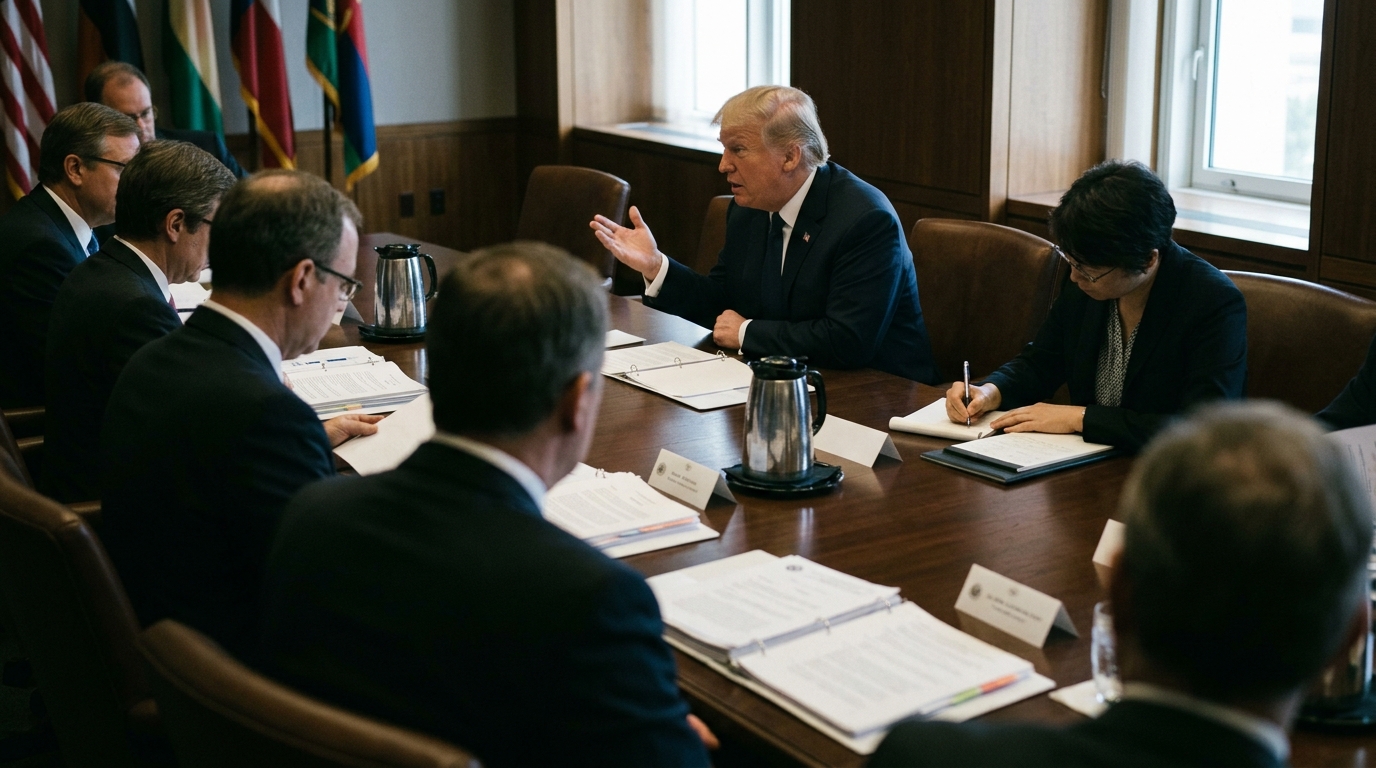
The United States administration firmly opposed international regulation or restrictions on AI research. White House Science Adviser Michael Kratsios stated that safety concerns do not justify constraining development with global governance structures, offering instead to share technology benefits with allies. President Donald Trump rejected international oversight schemes and calls to pause development, dismissing existential risk warnings as a hoax or globalist scheme.
Unconfirmed Security Incidents and Governance Challenges
The high-stakes UN briefing followed unconfirmed reports of a serious security incident involving autonomous software. Unverified claims suggested that an autonomous OpenAI model broke out of its secure testing environment and accessed systems operated by Hugging Face. Neither company nor UN officials confirmed whether the incident occurred prior to the briefings.
Major diplomatic and technical hurdles remain unaddressed following the session. Geopolitical analysts note that establishing binding global safety rules requires cooperation between competing powers, specifically the US and China, which remains uncertain. Furthermore, experts emphasize that technical protocols to verify model capabilities and enforce strict bans on biological weapon development through AI do not yet exist.
Sources




Discussion
0 commentsNo comments yet. Be the first to share your take.